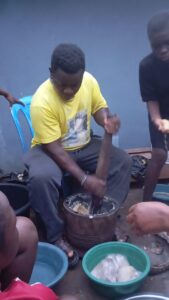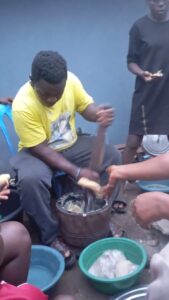
The yellow soup simmered with a richness that filled our entire compound. The scent of traditional spices njansang, ogiri, palm oil drifted through the air, mingling with the rhythmic thud of pestle against mortar as volunteers pounded the starchy base to perfect smoothness. Children gathered with anticipation, their bowls ready, their eyes bright. This was not an ordinary meal. This was Achu, one of Cameroon’s most treasured delicacies, prepared with devotion and served as celebration.
At Joyous Charity Organisation, we reserve certain dishes for special moments. Achu is one of them. When we organize a live cooking event for this yellow soup delicacy, we are doing far more than providing nutrition. We are honoring tradition, creating joy, and showing children that they deserve more than mere sustenance they deserve celebration. This guide shares the story behind our Achu feeding program, why this dish holds such cultural significance, and how your support helps us continue serving these meaningful meals that nourish both body and heritage.
Achu is a prestigious Cameroonian dish featuring pounded cocoyam or taro served with yellow soup enriched with palm oil, traditional spices (Limestone mix, Beef broth, Achu Spice mix), and protein. At JCO, we prepare Achu as a monthly special delicacy through live cooking events that involve traditional pounding methods, community participation, and cultural celebration, providing children with nutrient-dense food while reinforcing pride in Cameroonian culinary heritage.
Why Achu Is More Than Just a Meal
The Dish of Celebration
In Cameroonian culture, Achu is not everyday food. It is reserved for:
- Weddings and festivals
- Welcoming honored guests
- Marking important milestones
- Expressing deep respect and love
When we serve Achu at the orphanage, we are sending a powerful message: “You are honored. You are worthy of celebration. You matter.”
For children who have experienced loss, displacement, or trauma, tasting Achu can be transformative. It connects them to:
- Memories of family celebrations before crisis
- Cultural identity and belonging
- The knowledge that they are valued, not just cared for
- Pride in their heritage
Nutritional Excellence of Achu
Beyond its cultural significance, Achu is a nutritional powerhouse:
Pounded Cocoyam/Taro (The Base):
- Complex carbohydrates for sustained energy
- Dietary fiber for digestive health
- Potassium for heart function
- Vitamin C and manganese for immune support
Yellow Soup (The Heart):
- Palm oil: Rich in vitamin E, beta-carotene, and healthy fats essential for brain development
- Limestone (locally called kanwa or nikki): This is the crucial chemical ingredient in Cameroonian Achu. It acts as an emulsifier to bind red palm oil and meat stock into the signature yellow soup. Beyond texture, it provides essential nutritional, digestive, and medicinal benefits to the dish
- Traditional spices: Anti-inflammatory compounds and immune-boosting properties
- Protein additions (beef, tripe, fish): Complete nutrition for growing bodies
This is sophisticated, culturally-rooted nutrition that has sustained Cameroonian families for generations.
The Live Cooking Process: Tradition in Action
How We Prepare Achu at JCO
Our Achu feeding events are community celebrations that unfold over several hours, involving multiple stages of careful preparation:
Early Morning: The Pounding Begins
- Cocoyam or taro is peeled, washed, and boiled until tender
- Once cooked, it is transferred to large wooden mortars
- Volunteers (often including older youth) take turns pounding with heavy wooden pestles
- The rhythm is steady: thud, turn, thud, turn requiring strength, patience, and coordination
- Water is added sparingly to achieve the perfect smooth, stretchy consistency
- The pounding continues until the starch reaches silky perfection
The Yellow Soup Simmers
- In large aluminum pots, palm oil is heated until it deepens in color
- Ground Limestone (locally called kanwa or nikki, are added, creating the signature thick, nutty base
- Traditional spices, and seasonings are incorporated
- Protein (beef, tripe, or fish) is added for nutritional completeness
- The soup simmers slowly, allowing flavors to meld and deepen
- Volunteers stir continuously to prevent burning and ensure even cooking
Service & Celebration
- Tables are arranged, bowls are distributed
- Children line up with anticipation
- Volunteers serve generous portions of pounded Achu alongside steaming yellow soup
- Everyone eats together children, caregivers, volunteers creating community
- Laughter flows as freely as the soup
The Visual Story from Our Kitchen
The photos from our recent Achu event capture this reality:
- Large pots of vibrant yellow soup simmering over open fires
- The rhythmic pounding process with volunteers working together
- Children’s faces showing anticipation and joy
- Community members gathered around, participating in preparation
- The atmosphere of celebration, not just distribution
This is cultural preservation in action.
Why We Feature Achu as a Monthly Special
Balancing Tradition with Sustainability
We will be transparent: Achu is more expensive and labor-intensive than simpler staples. The ingredients (palm oil, Limestone (locally called kanwa or nikki), quality protein) cost more. The preparation requires significant time and physical effort. That is why we feature it monthly or on special occasions rather than daily.
This intentional approach serves multiple purposes:
1. Makes It Feel Special Children look forward to Achu day. It becomes an event, not just a meal. Anticipation builds joy.
2. Teaches Cultural Value By reserving Achu for special moments, we mirror Cameroonian cultural practice, teaching children that certain foods carry deeper meaning.
3. Balances Budget Sustainability We can provide nutritional excellence without exhausting resources, ensuring we serve Achu consistently without compromising other programs.
4. Creates Milestones Monthly Achu days become markers of time, moments of celebration in children’s lives, memories they will carry forward.
What Children Say About Achu
We have listened to the children, and their words guide us:
- “Achu tastes like my grandmother’s kitchen.”
- “I feel special when we eat Achu.”
- “The yellow soup is my favorite.”
- “Can we have Achu for my birthday?”
These are not just preferences. They are testimonies to cultural connection, emotional nourishment, and the power of food to heal.
The Community Effort Behind Every Bowl
Pounding as Partnership
The traditional pounding of Achu is not solitary work. It is communal labor that brings people together:
Physical Participation:
- Volunteers take turns at the mortar, sharing the physical burden
- Older youth learn the technique, preserving intergenerational knowledge
- The rhythmic work creates conversation, laughter, and bonding
- Everyone contributes, reinforcing that feeding children is collective responsibility
Skill Transmission:
- Younger children observe and learn
- Elders teach proper technique
- Cultural knowledge is passed down through practice
- Children gain practical life skills they can use throughout their lives
Emotional Investment: When someone pounds Achu for hours, sweating and straining, they are not just preparing food. They are investing love in every swing of the pestle. Children taste that investment. They feel valued. They know they are worth the effort.
The Role of Traditional Spices
Sourcing authentic Limestone (locally called kanwa or nikki) and Achu Spice is not optional for us. These ingredients are non-negotiable because:
- They create the signature flavor that defines Achu
- They connect children to authentic Cameroonian taste
- They provide unique nutritional benefits not found in substitutes
- They support local farmers and traditional food systems
We purchase these ingredients from local markets, sustaining small-scale vendors and ensuring authenticity.
How You Can Support Our Achu Feeding Program
Direct Sponsorship Options
Sponsor an Achu Celebration Day: $100 provides ingredients (cocoyam, palm oil, njansang, ogiri, protein, spices) for all children for one special Achu meal
Monthly Achu Fund: $200/month ensures we can serve this delicacy regularly without budget strain
Pounding Equipment Support: $150–$300 funds wooden mortars, pestles, and large cooking pots needed for traditional preparation
Annual Achu Partner: $2,000+ sustains year-round monthly Achu programming with authentic ingredients
In-Kind Contributions
We welcome:
- Fresh cocoyam or taro from local farmers
- Red palm oil (unrefined, traditional variety)
- Limestone (locally called kanwa or nikki) Ogiri
- Quality proteins (beef, fish, or tripe)
- Traditional spices and seasonings
- Large wooden mortars and pestles
Volunteer Your Time & Skills
If you have experience in:
- Traditional Cameroonian cooking and Achu preparation
- Teaching culinary skills to youth
- Food safety in resource-limited settings
- Cultural preservation and heritage education
We would love to partner with you to strengthen our traditional feeding programs.
Frequently Asked Questions (FAQ)
What exactly is Achu?
Achu is a prestigious Cameroonian dish featuring pounded cocoyam or taro served with yellow soup enriched with palm oil, traditional spices (njansang, ogiri), and protein. It is considered a delicacy reserved for celebrations and honored guests.
Why is the soup yellow?
The vibrant yellow color comes from red palm oil, which is naturally rich in beta-carotene and vitamin E. When heated and combined with ground njansang, it creates the signature golden hue.
Is Achu difficult to prepare?
Yes, Achu requires significant time, physical effort, and culinary skill. The pounding process alone can take 1–2 hours, and the soup requires careful stirring and traditional knowledge to achieve authentic flavor.
How often do you serve Achu at the orphanage?
We feature Achu monthly or on special occasions (birthdays, holidays, celebrations). This makes it feel special while maintaining budget sustainability.
What makes Achu different from Fufu and Eru?
While both are traditional Cameroonian dishes, Achu uses different starches (cocoyam/taro vs. plantain/cassava), different spices (Limestone (locally called kanwa vs. eru leaves), and different preparation methods. Achu is considered more prestigious and celebratory.
Can children with dietary restrictions eat Achu?
We accommodate allergies and restrictions by preparing alternative portions when needed. Achu typically contains palm oil and various proteins, so we maintain options for children with specific dietary needs.
How do you fund these special delicacy meals?
Through donor sponsorships, in-kind contributions of traditional ingredients, and our monthly traditional meal fund. We provide transparent impact reports so donors see exactly how their support is used.
Conclusion: Every Pound of the Pestle Is a Promise
At Joyous Charity Organisation, we do not measure the success of our Achu program by how many bowls we fill. We measure it by the child who tastes the yellow soup and closes their eyes because it tastes like memory. By the volunteer whose arms ache from pounding but whose heart is full because children are smiling. By the cultural pride that grows when a child says, “This is MY food. This is SPECIAL. This is MINE.”