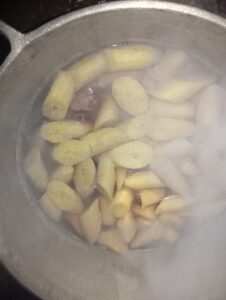
The aroma filled our compound before the sun fully rose: bitterleaf stew simmering with ground crayfish, palm oil, and spices. Large aluminum pots bubbled over open fires, stirred by hands that know the rhythm of care. Children gathered around colorful plastic tables pink, blue, green their plates ready, their anticipation palpable. This was not just another meal. This was Ndolé and plantains, one of Cameroon’s most beloved dishes, prepared fresh, served with love, and shared as community.
At Joyous Charity Organisation, we rotate through Cameroon’s traditional dishes not just for nutritional variety, but for cultural connection. When we organize a live cooking event for Ndolé and plantains, we are doing far more than filling stomachs. We are preserving heritage, teaching culinary traditions, and showing children that their tastes matter, their culture is worthy, and their meals are prepared with intention. This guide shares how this special feeding program unfolds, why Ndolé holds such significance in Cameroonian cuisine, and how your support ensures our children experience the full richness of their culinary heritage.
Ndolé and plantains is a nutrient-dense Cameroonian dish featuring bitterleaf stew enriched with ground crayfish, peanuts, and protein, served alongside boiled or fried plantains. At JCO, we prepare this dish through live cooking events that involve community participation, preserve culinary traditions, and provide children with iron-rich, protein-packed nutrition while reinforcing cultural identity and belonging.
What Makes Ndolé Special in Cameroonian Cuisine
The National Dish of Pride
Ndolé holds a unique place in Cameroon’s culinary landscape. Often called the national dish, it is served at celebrations, family gatherings, and moments of communal joy. For children who have experienced loss, displacement, or trauma, tasting Ndolé can trigger powerful memories: a mother’s kitchen, a family celebration, a sense of normalcy before crisis.
Nutritional Powerhouse:
- Bitterleaf (Ndolé greens): Rich in vitamins A, C, and K, plus iron and calcium
- Ground crayfish and peanuts: High-quality protein and healthy fats for brain development
- Palm oil/Groundnut Oil: Vitamin E and essential fatty acids
- Onions, garlic, and spices: Anti-inflammatory compounds and immune support
- Plantains: Complex carbohydrates, potassium, and fiber for sustained energy
This is not “simple” food. This is sophisticated, culturally-rooted nutrition that has sustained Cameroonian families for generations.
Why We Feature Ndolé as a Special Meal
We could serve rice and beans every day. They are affordable. They are filling. But they are not home.
When we prepare Ndolé and plantains, we are making a statement:
- “Your culture is worthy of celebration.”
- “Your tastes matter to us.”
- “You deserve more than survival you deserve joy.”
Children’s faces light up differently when Ndolé is served. There is recognition. There is pride. There is the quiet satisfaction of tasting something that connects them to who they are.
Behind the Scenes: How We Prepare Ndolé Live
The Live Cooking Process
Our Ndolé feeding events are not assembly-line operations. They are community experiences that unfold over several hours:
Early Morning Preparation Begins
- Volunteers wash fresh bitterleaf thoroughly, removing stems and tough pieces
- Ground crayfish and peanuts are measured and prepared
- Onions, garlic, and spices are chopped by hand
- Plantains are peeled and cut into portions
The Simmer
- Large aluminum pots are set over open fires or charcoal stoves
- Groundnut oil is heated, and spices are sautéed to release aromatics
- Bitterleaf is added and stirred gently to wilt
- Ground crayfish and peanuts are incorporated, thickening the stew
- Protein (fish, beef, or shrimp) is added for nutritional completeness
- The stew simmers slowly, allowing flavors to meld and deepen
Plantains & Service
- Plantains are boiled in separate pots until tender
- Tables are arranged with colorful plastic chairs
- Children line up with plates and bowls
- Volunteers serve generous portions of Ndolé alongside steaming plantains
- Everyone eats together, children, caregivers, volunteers, breaking down barriers
The Visual Story
The photos from our recent Ndolé event capture this reality:
- Large aluminum pots filled with rich, green bitterleaf stew
- Steaming plantains ready to serve
- Children seated at vibrant tables, eating together in community
- Volunteers ladling servings with care and generosity
- The atmosphere of a shared meal, not the distribution
This is dignified dining, not charity.
Why Live Cooking Matters
Transparency Builds Trust
When we say “live cooking,” we mean it. Donors and partners can see exactly how meals are prepared:
- Fresh ingredients, not processed substitutes
- Traditional methods, not shortcuts
- Community involvement, not isolated kitchen work
- Cultural authenticity, not imported menus
This transparency is not performative. It is accountability.
Children Learn by Watching
When older children observe the preparation process, they learn:
- How to wash and prepare bitterleaf
- How to balance spices and flavors
- How to stir without burning
- How to serve with generosity
These are not just cooking skills. They are life skills, cultural transmission, and intergenerational connection.
Community Participation Strengthens Bonds
Volunteers, caregivers, and even older children participate in preparation. This shared labor:
- Reduces the burden on any single caregiver
- Creates opportunities for conversation and mentorship
- Reinforces that feeding children is a collective responsibility
- Builds pride in cultural culinary traditions
The Nutritional Impact of Ndolé & Plantains
Beyond Calories: Developmental Nutrition
Children who receive Ndolé regularly benefit from:
Iron & Anemia Prevention: Bitterleaf is exceptionally rich in iron, critical for children who may have experienced malnutrition or blood loss from illness.
Protein for Growth: Ground crayfish, peanuts, and added proteins provide complete amino acid profiles necessary for physical development and immune function.
Brain Development: Healthy fats from palm oil and peanuts support cognitive development, memory, and concentration in school.
Digestive Health: Fiber from bitterleaf and plantains promotes gut health and regular digestion.
Sustained Energy: Complex carbohydrates from plantains provide steady energy without the crash of refined starches.
What Caregivers Observe
Our team has noticed tangible changes when Ndolé is featured regularly:
- Children eat more enthusiastically than with simpler meals
- Energy levels remain stable throughout the evening
- School performance improves with consistent iron and protein intake
- Children request the dish, showing cultural connection and preference development
This is nutrition that nourishes the body and identity.
How You Can Support Our Traditional Feeding Programs
Direct Sponsorship Options
Sponsor a Ndolé Feeding Day: $75 provides ingredients (bitterleaf, crayfish, peanuts, protein, plantains, palm oil) for all children for one special meal
Monthly Traditional Meal Fund: $150/month ensures we rotate through Ndolé, Achu, Fufu/Eru, and other cultural dishes regularly
Cooking Equipment Support: $200–$400 funds large aluminum pots, stirring utensils, and serving bowls needed for live cooking events
Annual Culinary Heritage Partner: $1,500+ sustains year-round traditional meal programming with diverse menu rotation
In-Kind Contributions
We welcome:
- Fresh bitterleaf (Ndolé greens) from local farmers or markets
- Ground crayfish and dried shrimp
- Raw peanuts or peanut paste
- Groundnut Oil/Red palm oil (unrefined, traditional variety)
- Ripe plantains
- Large aluminum cooking pots and ladles
Volunteer Your Culinary Skills
If you have experience in:
- Traditional Cameroonian cooking
- Nutrition planning for children
- Food safety in resource-limited settings
- Teaching culinary skills to youth
We would love to partner with you to strengthen our cultural feeding programs.
Frequently Asked Questions (FAQ)
What is Ndolé, exactly?
Ndolé is Cameroon’s national dish, featuring bitterleaf (a nutrient-dense green vegetable) stewed with ground crayfish, peanuts, palm oil, spices, and protein (fish, beef, or shrimp). It is typically served with plantains, rice, or fufu. The dish is rich in iron, protein, and healthy fats.
Why do you feature Ndolé as a special meal rather than daily?
While highly nutritious, Ndolé requires more expensive ingredients (crayfish, peanuts, quality protein) and longer preparation time than simpler staples. We feature it regularly (monthly or bi-weekly) to balance nutritional excellence with budget sustainability, while making it feel celebratory and culturally significant.
Can children with allergies eat Ndolé?
We accommodate dietary restrictions by preparing alternative portions when needed. Ndolé contains peanuts and shellfish (crayfish/shrimp), so we maintain peanut-free and shellfish-free options for children with allergies.
How do you source ingredients for Ndolé?
We purchase fresh bitterleaf, crayfish, and plantains from local markets, supporting small-scale vendors and ensuring ingredient freshness. Palm oil and peanuts are bought in bulk when prices are favorable.
Do children participate in preparing Ndolé?
Yes! Older children help wash bitterleaf, peel plantains, and observe the cooking process. This teaches culinary skills, cultural pride, and practical life knowledge they can use as they mature.
How does Ndolé compare nutritionally to other meals you serve?
Ndolé is exceptionally nutrient-dense, particularly high in iron, protein, and healthy fats. It complements other traditional dishes (Fufu/Eru, Achu) by offering different micronutrient profiles and flavor experiences, ensuring children receive varied, comprehensive nutrition.
Can donors see exactly how their Ndolé sponsorship is used?
Absolutely. We provide photos from live cooking events, ingredient receipts, and child testimonials (with consent) so you see the direct impact of your support. We believe transparency builds trust.
Conclusion: Every Pot Tells a Story of Heritage
At Joyous Charity Organisation, we do not measure the success of our Ndolé feeding program by how many pots we fill. We measure it by the child who tastes the bitterleaf and smiles because it reminds them of home. By the volunteer who stirs for hours without complaint because they know children are worth the effort. By the cultural pride that grows when a child says, “This is MY food. This is MY culture. This is worthy.”
Ndolé is more than a meal. It is memory. It is identity. It is love made edible.
When we prepare this dish live, with fresh ingredients and community participation, we are saying to every child: “You deserve celebration, not just survival. You deserve your heritage, not just calories. You deserve to know that your culture is beautiful.”
This work requires partners who understand that nutrition and culture are inseparable. Who see that feeding children is not just about keeping them alive it is about helping them thrive with dignity, pride, and connection.